Stay Consistent and Patient: The Key to Sustainable Weight Loss
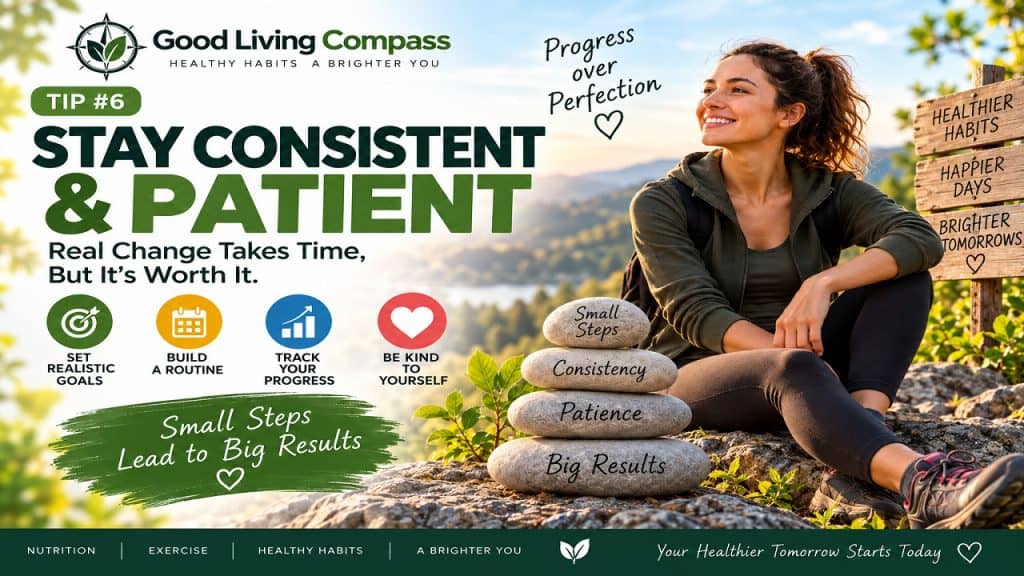
When you’re trying to lose weight, it’s easy to become frustrated when the results don’t appear as quickly as you hoped.
The journey toward Sustainable Weight Loss requires patience and consistency. Sustainable Weight Loss is not just about quick results; it is a lifestyle change that prioritizes healthy habits over time.
✔️You eat better.
✔️You exercise.
✔️You drink more water.
✔️You try to sleep enough.
✔️And then you step on the scale…
Nothing seems to have changed. This is where one of the most important principles of sustainable weight management comes in:
Progress matters more than perfection.
Healthy weight management isn’t usually about making the perfect choice every day. It’s about creating habits you can continue over time. The goal isn’t to be perfect. The goal is to keep going.
Why Consistency Matters More Than Perfection
When aiming for Sustainable Weight Loss, remember that consistency is key. Sustainable Weight Loss is a gradual process that involves making mindful decisions every day.
Many people approach weight loss with an “all or nothing” mindset. They decide:
- no more unhealthy food
- exercise every day
- follow a strict diet
- never miss a workout
- never eat dessert
- never have a bad day
It may work for a short time. But eventually, real life happens. You have a busy day. You go out for dinner. You miss a workout. You eat more than planned. And suddenly you feel like you’ve failed. But one difficult day doesn’t erase your progress. NIDDK specifically notes that setbacks are normal and recommends regrouping and returning to healthy habits rather than treating a setback as failure. That’s a much more Sustainable Weight Loss mindset.
Another important aspect of Sustainable Weight Loss is understanding that fluctuations in weight are normal. Sustainable Weight Loss is about long-term health and stability, not just the scale.
Think in weeks and months — not individual days.
👉 One meal doesn’t determine your results.
👉 One workout doesn’t determine your results.
👉 One day doesn’t determine your results.
Your repeated habits do.
Sustainable Weight Loss Takes Time

There is a reason the word “sustainable” is so important. If a weight-loss strategy requires you to completely change your lifestyle for a few weeks but feels impossible to continue afterward, maintaining the results can become difficult. A sustainable approach focuses on habits that can become part of your normal life. These can include:
Implementing a plan for Sustainable Weight Loss means focusing on realistic habits that fit your lifestyle. Sustainable Weight Loss strategies often include regular physical activity and balanced nutrition.
- eating nutritious foods
- managing portions
- staying physically active
- getting enough sleep
- drinking enough fluids
- managing stress
- monitoring your progress
- returning to your routine after setbacks
The CDC describes healthy weight loss as part of a broader lifestyle that includes healthy eating, regular physical activity, enough sleep and stress management.
Ultimately, pursuing Sustainable Weight Loss is about fostering a positive relationship with food and exercise. Sustainable Weight Loss should emphasize well-being over strict dieting.
Weight loss is not just a destination. It’s a process of building healthier habits.
Don’t Chase Perfect Results
Remember that Sustainable Weight Loss is a journey. Celebrate your small victories along the way, as Sustainable Weight Loss is about creating lasting habits.
One of the biggest mistakes people make is expecting progress to happen in a perfectly straight line. It usually doesn’t. Your weight can change because of many factors, including:
-
- food intake
- fluid balance
- activity
- sleep
- stress
- hormones
- medications
- age
- other health factors
Focusing on Sustainable Weight Loss helps build a foundation for long-term health. Sustainable Weight Loss is not just a phase; it is a commitment to a healthier lifestyle.
The scale can move up one day and down the next. That doesn’t necessarily mean your overall strategy is working or failing.
Instead of asking:
“Why didn’t I lose weight today?”
try asking:
“Did I follow the habits that support my goal?”
That question gives you something you can actually control.
Set Realistic Goals
A large goal can sometimes feel overwhelming. For example:
“I need to lose 30 pounds.”
Setbacks are part of the process of Sustainable Weight Loss, and it’s essential to understand that they do not define your journey. Each step towards Sustainable Weight Loss is an opportunity for growth.
That’s a big number. Instead, focus on smaller behaviors. For example:
“I’ll walk for 20 minutes after dinner three times this week.”
Or:
“I’ll prepare a healthy breakfast on Monday, Wednesday and Friday.”
Or:
“I’ll drink water instead of sugary drinks during the workday.”
Specific, achievable goals can make it easier to turn intentions into habits. NIDDK recommends setting specific goals rather than vague goals such as simply “be more active.”
Small goal → repeated action → stronger habit
That’s the process.
Progress Isn’t Always Visible on the Scale
This is an important point. Your progress isn’t necessarily limited to the number on the scale. You might notice:
Staying focused on your goals is crucial for Sustainable Weight Loss. Keep reminding yourself that Sustainable Weight Loss is a gradual process that rewards persistence.
- more energy
- better sleep
- improved fitness
- easier walks
- better food choices
- fewer sugary drinks
- improved confidence
- more consistent routines
- clothes fitting differently
These changes can be meaningful even when the scale isn’t moving exactly as you expected. That’s why tracking several aspects of your lifestyle can give you a better picture of your progress.
▶️ Track Your Progress
You don’t need an elaborate system. You could simply track:
Acknowledge how far you’ve come in your Sustainable Weight Loss journey. Sustainable Weight Loss demands dedication, but it also brings joy and improved well-being.
▶️ Nutrition
What are you eating most days?
▶️ Physical activity
How often are you moving?
▶️ Sleep
Are you getting enough rest?
▶️ Hydration
Are you drinking water regularly?
▶️ Weight
If weighing yourself is appropriate for you, monitor trends rather than reacting to every individual measurement.
▶️ Habits
Are you doing the behaviors you committed to?
NIDDK notes that tracking eating, physical activity and weight can help people stay focused and identify setbacks. The key is to use tracking as information, not as punishment.
Tracking your habits can enhance your journey towards Sustainable Weight Loss. Remember, Sustainable Weight Loss is about progress, not perfection.
What Should You Do After a Bad Day?
This may be one of the most important sections of the entire article. Imagine you planned to eat well all day. But then you had a stressful afternoon.
You ordered takeout. You ate dessert. And you skipped your workout. What should you do tomorrow? Don’t start over. Simply continue. You don’t need:
- a starvation diet
- hours of exercise
- punishment
- extreme restriction
You need to return to your normal routine. NIDDK specifically recommends regrouping after setbacks and getting back to your healthy eating plan as soon as possible.
Remember:
👉 A setback is an event.
👉 Giving up is a decision.
You can always choose to continue.
Create a Routine You Can Actually Maintain
Consistency becomes much easier when healthy habits are built into your routine. Instead of relying on motivation every day, create simple systems. For example:
Integrating new habits into your routine can significantly impact your Sustainable Weight Loss efforts. Sustainable Weight Loss is about finding what works best for you.
Morning: Water + nutritious breakfast
Daytime: Regular movement + balanced meals
Afternoon: Healthy snack if needed
Evening: Dinner + short walk
Night: Relax + adequate sleep
The exact routine doesn’t matter as much as finding something that fits your lifestyle. NIDDK emphasizes that a healthy eating plan should be one you can maintain over time.

Don’t Try to Change Everything at Once
When pursuing Sustainable Weight Loss, it’s vital to maintain a balanced approach. Sustainable Weight Loss ensures you can enjoy life while achieving your goals.
Another common mistake is attempting to completely transform your lifestyle overnight. You might decide to:
- completely change your diet
- start running
- lift weights
- meditate
- sleep eight hours
- drink more water
- stop eating sugar
- cook every meal
- track every calorie
All at once. That’s a lot. Instead, choose one or two habits and build from there. For example:
Week 1
Take one small step at a time towards Sustainable Weight Loss. Each week can bring new opportunities to reinforce your Sustainable Weight Loss goals.
✅ Drink more water.
Week 2
✅ Add regular walks.
Week 3
✅ Improve breakfast.
Week 4
✅ Create a consistent bedtime.
Week 5
✅ Improve portion control.
Over time, these small changes can become part of your lifestyle.
Consistency Beats Extreme Effort
Always remember, Sustainable Weight Loss is about consistency, not extremes. Aiming for Sustainable Weight Loss means embracing a healthy lifestyle.
You don’t necessarily need the hardest workout. You don’t necessarily need the strictest diet. You don’t need to be perfect. You need something you can repeat. Think about the difference:
Extreme approach
100% effort for 10 days → burnout → stop
versus:
Sustainable approach
70–80% consistency for months → gradual improvement → healthier routine
The second approach may feel less dramatic. But that’s exactly the point. Healthy habits need to survive real life.
Be Patient With Your Progress
Be patient with yourself as you work towards Sustainable Weight Loss. Sustainable Weight Loss is a continuous journey that requires time and commitment.
Patience doesn’t mean doing nothing. It means continuing to take action while giving your habits time to work. The CDC notes that people who lose weight at a gradual, steady pace—around 1–2 pounds per week—are more likely to keep the weight off than those who lose weight more quickly. Individual results vary, and weight management is influenced by many factors. So don’t compare your progress with:
- social media transformations
- celebrity diets
- dramatic before-and-after photos
- unrealistic promises
- someone else’s timeline
Your body isn’t following someone else’s schedule. Your job is to keep building healthier habits.
How Smoothies Can Fit Into a Consistent Routine
Your approach to Sustainable Weight Loss should include a variety of nutritious options. Sustainable Weight Loss is achievable with the right mindset and tools.
Now we can connect this article naturally with the next step in your Good Living Compass journey. One reason people struggle with healthy eating is that it can feel complicated.
What should I eat ⁉️
How much ⁉️
What should I prepare ⁉️
What can I eat when I’m busy ⁉️
Smoothies can sometimes provide a convenient option for a balanced meal or snack when they’re made with nutritious ingredients such as:
- fruits
- vegetables
- protein
- fiber
- healthy fats
The key is not to treat smoothies as a magic weight-loss solution. Instead, they can be one practical tool within a broader healthy eating routine. And that’s exactly why consistency matters. If a healthy eating approach is simple enough to fit into your everyday life, it may be easier to maintain.
A Simple Consistency Checklist
Use this checklist at the end of each week:
Nutrition
☐ I ate nutritious foods most days
☐ I paid attention to portions
☐ I included protein and fiber
Movement
☐ I stayed physically active
☐ I moved regularly throughout the week
Hydration
☐ I drank water regularly
Sleep
☐ I gave myself enough time to sleep
Mindset
☐ I didn’t expect perfection
☐ I recovered from setbacks
☐ I focused on progress
Planning
☐ I prepared for the week ahead
You don’t need every box checked every day. The goal is to create a pattern of healthy behavior over time.
Remember: Progress Over Perfection
The message from this week’s Good Living Compass tip is simple:
👍 Stay consistent.
👍 Stay patient.
👍 Keep going.
You will have good days. You will have difficult days. You may occasionally lose motivation. That’s normal. What matters is what you do next. You don’t have to be perfect to make progress. You just have to keep moving forward.
Ready for the Next Step?
If you’re building healthier habits and looking for a practical approach to nutrition, smoothies can be one option to consider. We’ve created a separate guide that explores how smoothies can fit into a structured 21-day approach to weight management, including meal ideas and practical guidance.
Can Smoothies Help You Lose Weight? A Simple 21-Day Approach
Explore the 21-Day Smoothie Diet →
The most useful approach is the one that helps you create healthy habits you can continue.
Ultimately, your focus should be on Sustainable Weight Loss as a means to reach a healthier, happier you. Sustainable Weight Loss is all about making long-term changes.
Small steps. Consistent habits. Long-term progress.
Your journey doesn’t require perfection. It requires the next good choice.
FAQ — Stay Consistent & Patient
Sustainable Weight Loss is a commitment to lifelong habits that enhance your health and well-being. Celebrate your journey towards Sustainable Weight Loss.
How important is consistency for weight loss?
Consistency is important because sustainable weight management depends on maintaining healthy eating, physical activity and other lifestyle habits over time. A single meal or workout is less important than the overall pattern of your behavior.
Why is sustainable weight loss better than rapid weight loss?
Gradual weight loss can be easier to maintain than very rapid weight loss. The CDC notes that people who lose weight at a gradual, steady pace are more likely to keep it off. Individual results vary, however.
What should I do if I have a bad day?
Don’t treat one difficult day as failure. Return to your normal healthy routine at the next opportunity. Setbacks are a normal part of changing habits.
How can I stay motivated when I don’t see results?
Focus on behaviors you can control, such as eating nutritious foods, staying active, getting enough sleep and following your routine. Tracking habits and celebrating small improvements can also help you recognize progress that isn’t immediately visible on the scale.
How do I create realistic weight-loss goals?
Start with specific, achievable goals focused on behaviors rather than only a final number on the scale. For example, instead of saying “I will exercise more,” choose a specific activity, duration and schedule that fits your lifestyle.
Can smoothies be part of a sustainable weight-loss plan?
Yes. A balanced smoothie can be a convenient meal or snack, especially when it contains nutritious ingredients such as fruit, vegetables, protein and fiber. However, smoothies should be part of an overall healthy eating pattern rather than viewed as a guaranteed weight-loss solution.