How to Create a Calorie Deficit for Healthy Weight Loss
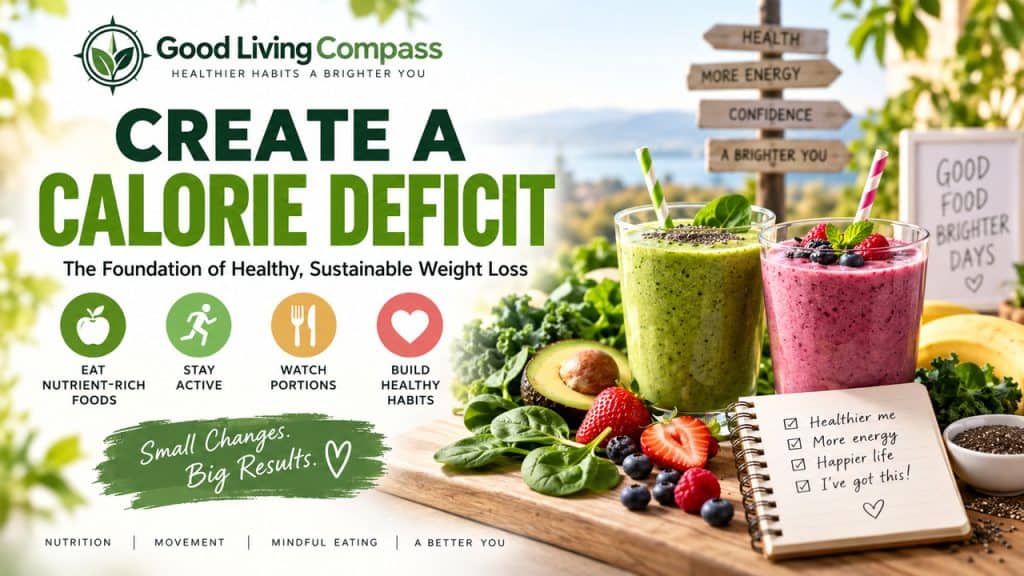
Create a Calorie Deficit: The Foundation of Weight Loss
Losing weight doesn’t have to mean following an extreme diet, skipping meals, or completely eliminating your favorite foods.
One of the fundamental principles behind weight loss is surprisingly simple:
Your body needs to use more energy than you consume over time.
This is known as a calorie deficit. But creating a calorie deficit doesn’t mean you have to constantly feel hungry or spend your entire day counting calories. The goal is to find a sustainable way of eating that helps you manage your calorie intake while still providing your body with the nutrients, protein, fiber, and energy it needs. And that’s where your everyday food choices become important.
What Is a Calorie Deficit?
A calorie deficit occurs when you consume fewer calories than your body uses for energy. For example, imagine that your body uses approximately 2,000 calories per day. If you consistently consume around 1,700 calories, you have created an approximate 300-calorie daily deficit. The basic concept looks like this:
Calories from food → Calories your body uses → Energy balance
When energy intake is lower than energy expenditure over time, your body can use stored energy to help meet its needs. However, your individual calorie needs depend on many factors, including your age, body size, activity level and other circumstances. That’s why there isn’t one calorie target that works for everyone.
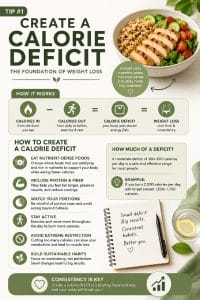
How Can You Create a Calorie Deficit?
The good news is that you don’t necessarily need to make dramatic changes. Small adjustments to your everyday habits can make a meaningful difference over time.
1. Choose Nutrient-Dense Foods
Foods that provide plenty of nutrients relative to their calorie content can make it easier to build satisfying meals.
Think about including:
- vegetables
- fruits
- whole grains
- lean protein
- legumes
- nuts and seeds
- other minimally processed foods
The idea isn’t to make every meal perfect. It’s to gradually make foods that support your goals a bigger part of your everyday diet.
2. Include Protein and Fiber
Protein and fiber can be particularly useful when you’re trying to manage your food intake. Protein is important for maintaining muscle and supporting many functions in the body. Fiber can contribute to feelings of fullness and is found naturally in foods such as vegetables, fruits, legumes and whole grains. A meal containing a combination of protein, fiber and nutrient-rich foods can often be more satisfying than a meal based primarily on highly processed foods.
3. Pay Attention to Portions
You don’t necessarily have to eliminate foods you enjoy. Instead, start paying attention to how much you’re eating. A simple strategy is to serve your food on a plate rather than eating directly from a package. You can also slow down while eating and give yourself time to notice when you’re becoming comfortably full. These small habits can make calorie management easier without making your diet feel overly restrictive.
4. Stay Active
Exercise isn’t the only factor involved in weight loss, but physical activity can increase the amount of energy your body uses. You don’t have to start with intense workouts. Walking, cycling, swimming, strength training and other activities can all become part of an active lifestyle. The most useful activity is often the one you can realistically continue doing.
5. Avoid Extreme Restriction
Creating a calorie deficit doesn’t mean eating as little as possible. Very restrictive diets can be difficult to maintain and may make it harder to get enough nutrients. Instead of asking:
“How little can I eat?” A better question is:
“How can I make my meals more satisfying while keeping my overall calorie intake appropriate for my goals?” That change in perspective can make the process much more sustainable.
The Real Challenge: Making a Calorie Deficit Easier
Understanding a calorie deficit is one thing. Maintaining it consistently is another. Many people know that food choices matter, but struggle with:
- constantly feeling hungry
- snacking between meals
- large portions
- cravings
- lack of meal-planning
- busy schedules
- getting bored with the same meals
This is where having a simple eating routine can help. Instead of trying to completely reinvent your diet overnight, look for practical ways to make nutritious meals easier to prepare and easier to stick with.
Could Smoothies Be Part of Your Weight-Loss Routine?
For some people, smoothies can be a convenient way to incorporate fruits, vegetables and other nutritious ingredients into their daily eating routine. A well-planned smoothie can also be combined with ingredients that provide protein, fiber and other nutrients. But there’s an important point:
A smoothie isn’t automatically a weight-loss food.
The ingredients and portion size matter. A smoothie packed with high-calorie ingredients, added sugars or very large portions can contain considerably more calories than you might expect. The goal is therefore not simply to “drink smoothies.” It’s to use convenient meals and food choices strategically as part of an overall eating pattern that fits your calorie and nutrition needs.
Looking for a Simpler Approach?
If you’re interested in exploring a more structured smoothie-based approach to weight management, you may want to take a look at Smoothie Diet.
The idea behind a smoothie-focused approach is to make healthy meal choices more convenient and easier to organize. Rather than trying to figure out every meal from scratch, a structured plan can provide recipes and ideas that help simplify the process.
Before you start, consider your own needs
Everyone’s nutritional requirements are different. If you have a medical condition, take medication, are pregnant or breastfeeding, or have specific dietary requirements, it’s a good idea to speak with an appropriate healthcare professional before making significant dietary changes.
Discover the Smoothie Diet Approach
If you’re curious about how a smoothie-based weight-loss routine could fit into your lifestyle, you can learn more about the Smoothie Diet here:
Explore the Smoothie Diet
[Learn More About Smoothie Diet →]
This is an affiliate link. If you purchase through the link, Good Living Compass may receive a commission at no additional cost to you.
Small Changes. Consistent Habits. Better Results.
Weight loss doesn’t have to start with a radical transformation. Sometimes it starts with something much simpler:
one better meal, one better choice and one better habit at a time.
✔️ Creating a calorie deficit is an important concept to understand, but the real goal is to develop an eating pattern that you can realistically maintain.
✔️ Focus on nutrient-rich foods.
✔️Pay attention to portions.
✔️Include protein and fiber.
✔️ Stay active.
✔️ Get enough sleep.
✔️ And most importantly, give yourself time.
Consistency matters more than perfection.
Your Next Step
If you want to explore a convenient smoothie-based approach to organizing your meals, take a look at:
Learn about the program, see what it includes, and decide whether this type of approach fits your own goals and lifestyle.

Good Living Compass
Simple ideas. Healthy habits. A better direction.