Strength Training for Weight Loss: 5 Benefits You Need to Know
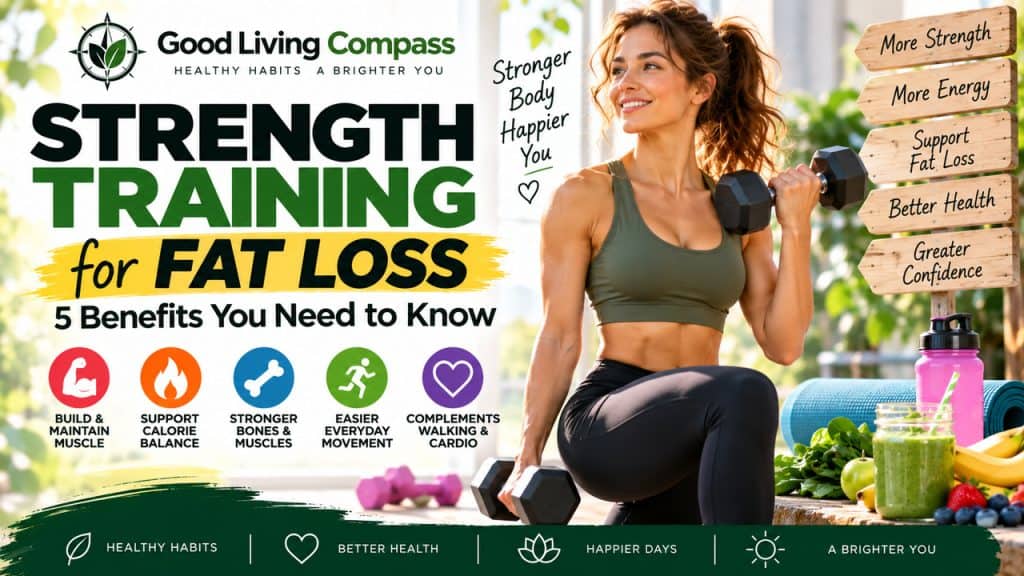
Strength training isn’t only for building bigger muscles. It can also be an important part of a healthy weight-management routine. Incorporating training for weight loss can significantly enhance your results.You don’t need to become a competitive weightlifter or spend hours in the gym. Simple resistance exercises using weights, resistance bands or even your own body weight can help you build and maintain muscle while supporting an active lifestyle. And when strength training, including training for weight loss, is combined with regular movement and nutritious eating, it can become part of a sustainable approach to managing your weight. Let’s look at 5 benefits of strength training for fat loss and overall health. Incorporating training for weight loss into your routine, along with other forms of exercise, can significantly enhance your weight management efforts.
1. Strength Training Helps You Build and Maintain Muscle
Training for weight loss is not just beneficial for aesthetics but also for overall health and well-being. Consider how training for weight loss fits into your overall fitness strategy. When you focus on training for weight loss, the goal isn’t simply to make the number on the scale smaller. Maintaining muscle is also important. Strength training challenges your muscles through resistance. This can come from exercises involving training for weight loss, such as:
By including training for weight loss in your weekly schedule, you can achieve a more balanced fitness routine that supports your overall goals.
- dumbbells
- resistance bands
- weight machines
- barbells
- body-weight exercises
- everyday activities that require lifting or carrying
NIDDK notes that muscle-strengthening activity, including training for weight loss, can help maintain muscle mass and prevent muscle loss as you age or lose weight. That’s one reason resistance training can be useful during a weight-management journey. Integrating training for weight loss can help maintain muscle while you work towards your weight goals. Integrating training for weight loss can help maintain muscle while you work towards your weight goals, ensuring that you remain healthy and fit.
You don’t need a gym
You could start at home with simple movements such as:
- squats to a chair
- wall push-ups
- body-weight lunges, if appropriate for you
- resistance-band exercises
- light dumbbell exercises
- standing exercises using your body weight
The important thing is to choose exercises that match your current ability.
2. Strength Training Can Support Your Calorie Balance
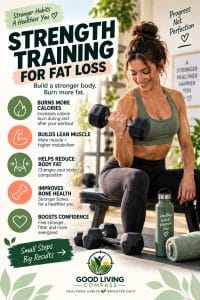
Training for fat loss is essential for achieving a sustainable calorie deficit. Weight loss requires an energy deficit over time. Physical activity increases the amount of energy your body uses, while food and beverage intake also contributes to your overall energy balance. Strength training can therefore be one component of an overall weight-management strategy. But there’s an important distinction:
👉Training for weight loss is essential for achieving a sustainable calorie deficit and should be included in your weight management plan.
👉Consider how training for weight loss fits into your overall weight-loss strategy and make it a priority.
Strength training isn’t a magic fat-burning shortcut.
You don’t need to believe that lifting weights automatically causes fat loss. Instead, think of it as one part of a bigger system:
Understanding the role of training for fat loss can help you set realistic expectations.
▶️ Nutritious food
▶️ Appropriate calorie intake
▶️ Strength training
▶️ Walking and other activity
▶️ Adequate sleep
▶️ Consistency
This approach is much more realistic than looking for one exercise that supposedly solves everything.
3. Strength Training Supports Stronger Bones and Muscles
The benefits of resistance training go beyond weight management. Regular muscle-strengthening activity can help maintain muscle and support bone strength. NIDDK specifically lists maintaining muscle mass and increasing bone strength among the potential benefits of strength training. That matters because a healthy body isn’t defined only by body weight. You also want to be able to:
Training for weight loss supports not only weight management but also bone density, making it critical for overall health.
- climb stairs
- carry groceries
- get up from a chair
- lift everyday objects
- maintain physical independence
- stay active as you get older
Strength is useful in everyday life. And that’s one reason to view resistance training as a health habit, rather than simply a weight-loss technique. Training for fat loss can improve your quality of life as you age.
4. Strength Training Can Make Everyday Movement Easier
Getting stronger can help you perform everyday activities more comfortably. Think about the movements you perform regularly:
Consider how training for fat loss can positively impact your daily activities. Consider how consistent training for weight loss can positively impact your daily activities.
Picking something up.
Carrying shopping bags.
Getting out of a chair.
Climbing stairs.
Playing with your children.
Working around the house.
These activities all require your muscles to do work. NIDDK notes that strength training can help people continue performing everyday activities such as carrying groceries or moving furniture. And when movement becomes easier, staying active can become easier too.
5. Strength Training Complements Walking and Cardio
Imagine combining walking with strength training. Instead of relying on just one type of exercise, you can build a more balanced activity routine. For example:
Combining training for weight loss with cardio can accelerate your results and improve your fitness levels.
Monday > Strength training
Tuesday > 30-minute brisk walk
Wednesday > Rest or gentle movement
Thursday > Strength training
Friday > 30-minute brisk walk
Saturday > Longer walk or another enjoyable activity
Adjust your routine to include more training for fat loss to optimize your efforts. Adjust your routine to include more training for weight loss to optimize your efforts and maintain your progress.
Sunday > Rest and recovery
This is only an example — your schedule should match your fitness level, preferences and health. Current guidelines recommend that adults include muscle-strengthening activities involving the major muscle groups on at least 2 days per week, alongside aerobic activity.
How Often Should You Strength Train?
For general health, adults are advised to perform muscle-strengthening activities on 2 or more days per week, working the major muscle groups. You don’t necessarily need to train every day. In fact, recovery matters. NIDDK recommends allowing at least one day of rest before working the same muscle groups again. A simple starting point could therefore be:
2 strength sessions per week
with walking or other moderate activity on other days. As your fitness improves, you can gradually adjust your routine.
What Exercises Can Beginners Try?
Training for weight loss doesn’t have to be complicated; start with basic exercises that you can do at home. You don’t need advanced exercises to get started. Here are some common options:
Lower body
- chair squats
- body-weight squats
- step-ups
- supported lunges
👉Upper body
-
- wall push-ups
- resistance-band rows
- light dumbbell curls
Incorporating training for fat loss can enhance your overall fitness level.
- overhead presses, when appropriate
👉Core
- modified planks
- bird-dog exercises
- dead bugs
- other controlled core exercises
👉Full body
-
- resistance-band exercises
- light dumbbell routines
- body-weight circuits
Make sure your training for fat loss includes a variety of exercises to avoid plateaus. Make sure your training for weight loss includes a variety of exercises to avoid plateaus and keep progressing. The right exercises depend on your ability, experience and health. And proper technique matters. NIDDK notes that incorrect lifting technique can increase the risk of injury and suggests learning appropriate exercises and form, potentially with help from a qualified fitness professional.
Start Small and Progress Gradually
One of the biggest mistakes beginners make is trying to do too much too soon. You don’t need to start with heavy weights. You could begin with:
👉1 set
👉8–12 controlled repetitions
👉Rest
Repeat as appropriate. As the exercises become easier, you can gradually increase the number of repetitions, sets or resistance. NIDDK recommends making changes gradually rather than increasing the difficulty too quickly. Your goal isn’t to finish the hardest workout possible. Your goal is to create a routine you can continue.
Strength Training and Fat Loss: What About the Scale?
Here’s something important to remember: the scale doesn’t tell you everything about your progress in training for weight loss. Your weight can fluctuate from day to day because of factors such as hydration, food intake, and other normal changes. Tracking your progress in training for fat loss can motivate you to continue.
- strength
- repetitions
- walking time
- energy levels
- how your clothes fit
- consistency
- overall fitness
This is exactly why we previously discussed tracking your progress rather than focusing exclusively on the scale.
Strength Training + Walking + Healthy Eating
This is where the Good Living Compass approach comes together. Imagine your weekly routine as three connected pieces:
MOVE
Walking and other aerobic activities.
STRENGTHEN
Resistance training at least twice a week.
NOURISH
Nutritious meals that provide the energy and nutrients your body needs. Physical activity and a sustainable eating pattern work together as part of long-term weight management. You don’t need to make everything perfect. You need a routine that you can realistically maintain.
A Simple Beginner Strength Routine
Training for fat loss can be adapted to suit any fitness level. Here’s an example of a simple full-body routine.
Exercise 1 — Chair Squats
8–12 repetitions: Sit toward a chair and stand back up in a controlled movement.
Exercise 2 — Wall Push-Ups
8–12 repetitions 👉 Place your hands against a wall and perform controlled push-ups.
Exercise 3 — Resistance-Band Row
8–12 repetitions 👉 Pull the band toward your body while maintaining controlled movement.
Exercise 4 — Glute Bridge
8–12 repetitions 👉 Lie on your back with your knees bent and gently lift your hips.
Exercise 5 — Modified Plank
Hold for a comfortable duration
Choose a version appropriate for your current ability. Start with one set if you’re new to strength training. As you become comfortable, you can gradually increase the workload. This is an example, not an individualized exercise prescription.
Can Strength Training Alone Burn Belly Fat?
This is one of the most common questions. The short answer is that you shouldn’t approach fat loss as something you can reliably target from one particular body area through a specific exercise. Strength training can help you build and maintain muscle, while overall fat loss depends on factors including your energy balance, eating pattern and activity level. So rather than searching for a “belly fat exercise,” focus on the bigger picture:
Build muscle > Stay active > Eat well >Sleep enough > Manage stress > Stay consistent.
That’s a much more useful framework for long-term health.
Your 2-Day Strength Training Challenge
Ready to add strength training to your week? Ready to incorporate training for fat loss into your schedule? Try this simple challenge:
| Day | Activity |
|---|---|
| Monday | Strength training |
| Tuesday | Walking |
| Wednesday | Rest or gentle movement |
| Thursday | Strength training |
| Friday | Walking |
| Saturday | Outdoor activity |
| Sunday | Rest or relaxed walk |
You don’t have to follow this exact schedule. The important idea is to combine strength + aerobic movement + recovery. Current guidance recommends at least two days of muscle-strengthening activity for adults.
What About Nutrition?
Remember, training for fat loss is just one part of the equation for healthy living. Exercise is only one part of the picture. If your goal is healthy weight management, the food you eat still matters. A balanced eating pattern can include:
- vegetables
- fruits
- whole grains
- lean protein sources
- beans and lentils
- nuts and seeds
- healthy fats
NIDDK recommends a sustainable healthy eating plan alongside regular physical activity for people working toward weight loss or weight maintenance. And this is where we can connect exercise with the nutrition side of your journey.
Can Smoothies Fit Into a Healthy Routine?
Explore how smoothies can complement your training for fat loss efforts. They can. A smoothie can be one convenient way to combine foods such as:
- fruit
- vegetables
- protein
- fiber
- healthy fats

Looking for a Structured Nutrition Plan?
Consider how nutrition and training for fat loss can work hand in hand. Consider how nutrition and training for weight loss can work hand in hand to enhance your results.
Strength training can help you build a stronger, more active lifestyle. Nutrition is another important part of the equation. If you’d like a structured approach centered around smoothies and meal planning, take a look at the 21-Day Smoothie Diet.
Button:

The Bottom Line
Strength training isn’t just about building bigger muscles; it can help you with effective training for weight loss as well. Overall, training for weight loss is an essential strategy for effective weight management and achieving your goals.
- Build and maintain muscle
- Support your overall calorie balance
- Strengthen muscles and bones
- Make everyday movement easier
- Complement walking and other physical activity
✔️ You don’t need to become a fitness expert.
✔️ You don’t need expensive equipment.
✔️ And you don’t need to start with an intense workout.
✔️ Start where you are.
✔️ Choose a few appropriate exercises.
✔️ Train consistently.
✔️ Recover.
✔️ Gradually progress.
Combining all these elements with training for fat loss leads to lasting success.
Combining all these elements with training for weight loss leads to lasting success.
✔️ And combine strength training with walking, nutritious food and the other healthy habits you’re building.
Small steps. Consistent habits. Long-term progress.
Your journey doesn’t require perfection. It requires the next good choice.
Track your habits. Learn from your progress. Make small adjustments. Keep moving forward.
Small steps. Stronger body. Healthier lifestyle.
Important Note
If you have a chronic health condition, an injury, significant mobility limitations, or you haven’t exercised for a long time, consider speaking with a healthcare professional before beginning a new strength-training routine. NIDDK recommends discussing physical activity with a health professional when health conditions or disabilities may affect what activities are appropriate.
FAQ
1. Can strength training help with fat loss?
Strength training can be part of a weight-management routine by increasing physical activity and helping maintain muscle mass. Fat loss also depends on overall energy balance and eating habits.
2. How often should I do strength training?
Adults should generally perform muscle-strengthening activities involving the major muscle groups on at least 2 days per week.
3. Can beginners do strength training?
Yes. Beginners can start with appropriate body-weight exercises, resistance bands or light weights and gradually increase the difficulty as they become more comfortable.
4. Do I need a gym to strength train?
No. Strength training can be performed at home using body weight, resistance bands, dumbbells or other suitable equipment.
5. Can strength training help maintain muscle while losing weight?
Strength training may help maintain muscle mass during weight loss, which is one reason it can be useful as part of a healthy weight-management plan.